Audio Innovations

Car Stereos, Auto Customizing, Mobile Electronics

1105 Jim's Lane, Conway, AR 72032 501-358-6545
  • Home
  • Services
    • Car Audio
    • Driver Safety Systems
    • Marine Audio
    • Motorcycle Audio
    • Radar and Laser Detector Systems
    • Remote Starters
  • About Us
  • Location
  • Customer Reviews
  • Contact Us
  • Facebook
  • Instagram

Everything You’ve Wanted to Know About Audio Distortion – Part 1

DistortionWhen we talk about any signal, be it audio, video or data, there is an accompanied reality for alterations and errors made to that signal as it passes through different electronic components, conductors or magnetic fields. While we get concerned when we hear that a component introduces distortion or when we read distortion specifications, distortion is part of nature and is simply unavoidable. Until any distortion reaches a significant level in an analog signal, it can’t be heard or seen.

Starting With A Foundation in Audio Distortion

With that in mind, let’s create a foundation for observing and understanding the properties of an audio signal in the electrical and frequency domains. This information will serve as the foundation for understanding distortion in part two of this article.

Any signal, be it Direct Current (DC) or Alternating Current (AC), can be analyzed in two ways – in its time domain or frequency domain. Understanding the difference between these two observation domains will dramatically simplify the life of anyone involved in the mobile electronics industry.

When we observe a signal in the time domain, we are looking at the amplitude of the signal relative to time. Normally, we would use a voltmeter or oscilloscope to look at signals in the time domain. When we consider a signal in the frequency domain, we are comparing the amplitude (or strength) of individual frequencies, or groups of frequencies within the signal. We use an RTA (real time analyzer) on a computer or handheld/benchtop devices to look at the frequency domain.

Direct Current

When analyzing the amplitude of an electrical signal, we compare the signal to a reference; in 99% of applications, the reference is known as ground. For a DC signal, the voltage level remains constant with respect to the ground reference and to time. Even if there are fluctuations, it is still a DC signal.

If you were to chart the frequency content of a DC signal, you would see it is all at 0 hertz (Hz). The amplitude does not change relative to time.

Let’s consider the DC battery voltage of your car or truck. It is a relatively constant value. Regarding amplitude versus time, it sits around a 12.7-12.9 volts on a fully charged battery with the vehicle off. When the vehicle is running and the alternator is charging, this voltage increases to around 13.5 to 14.3 volts. This increase is caused because the alternator is feeding current back into the battery to charge it. If the voltage produced by the alternator was not higher than the resting voltage of the battery, current would not flow and the battery would not be recharged.

Alternating Current

AC Signal – Time

DistortionIf we look at an AC signal, such as a 1 kHz tone that we would use to set the sensitivity controls on an amplifier, we see something very different. In the case of a pure test tone like this, the waveform has a sinusoidal shape, called a sine wave. If we look at a sine wave on an oscilloscope, we see a smoothly rolling waveform that extends just as much above our reference voltage as it does below.

AC Signal – Frequency

DistortionIt is now wise to look at this same signal from the perspective of the frequency domain. The frequency domain graph will, if there is no distortion, show a single frequency. In consideration of an audio signal, the amplitude (or height) of that frequency measurement depends on how loud that single frequency is relative to the limits of our recording technology or measurement device.

Audio

When we listen to someone speak or play a musical instrument, we hear many different frequencies at the same time. The human brain is capable of decoding the different frequencies and amplitudes. Based on our experiences, and the differences in frequency and time response between one ear and the other, we can determine what we are hearing, and the location of the sound relative to ourselves.

Analyzing the time domain content of an audio signal is relatively easy. We would use an oscilloscope to observe an audio waveform. The scope will show us the signal voltage versus time. This is a powerful tool in terms of understanding signal transmission between audio components.

A Piano Note

Middle C – Time

DistortionLet’s look at the amplitude and frequency content of a sound most of us know well. The following graph is the first 0.25 seconds of a recording of a piano’s middle C (C4) note in the time domain. This represents the initial hit of the hammer onto the string. If you look at the smaller graph above the larger one, you will see the note extends out much further than this initial .25 second segment.

Middle C – Frequency

DistortionWe know that the fundamental frequency of this note is 261.6 Hz, but if you look at the frequency domain graphs, we can see that several additional and important frequencies are present. These frequencies are called harmonics. They are multiples of the fundamental frequency, and the amplitude of these harmonics is what makes a small upright piano sound different from a grand piano, and from a harp or a guitar. All of these instruments have the same fundamental middle C frequency of 261.6 Hz; their harmonic content makes them sound different. In the case of this piano note recording, we can see there is a large spike at 523 Hz, then increasingly smaller spikes at 790 Hz, 1055 Hz, 1320 Hz and so on.

Sine vs Square Waveforms

Every audio waveform is made up of a complex combination of fundamental and harmonic frequencies. The most basic, as we mentioned, is a pure sine wave. A sine wave has only a single frequency. At the other end of the spectrum is a square wave. A square wave is made up of a fundamental frequency, then an infinite combination of odd-ordered harmonics at exponentially decreasing levels. Keep this in mind, since it will become important later as we begin to discuss distortion.

Noise Signals

Noise is a term that describes a collection of random sounds or sine waves. However, we can group a large collection of these sine waves together and use them as a tool for testing audio systems. When we want to measure the frequency response of a component like a signal processor or an amplifier, we can feed a white noise signal through the device and observe the changes it makes to the amplitudes of different frequency ranges.

White Noise – Time

DistortionYou may be asking, what exactly is white noise? It is a group of sine waves at different frequencies, arranged so the energy in each octave band is equal to the bands on either side. We can view white noise from a time domain as shown here.

White Noise – Frequency

DistortionWe can also view it from the frequency domain, as displayed in this image.

Variations In Response

The slight undulations in the frequency graph are present because it takes a long time for all different frequencies to be played and produce a ruler-flat graph. On a 1/3-octave scope, the graph would be essentially flat.

Foundation For Time And Frequency Domains

There we have our basic foundation for understanding the observation of signals in the time domain and the frequency domain. We have also had our first glimpse into how harmonic content affects what we hear. Understanding these concepts is important for anyone who works with audio equipment, and even more important to the people who install and tune that equipment. Your local mobile electronics specialist should be very comfortable with these concepts, and can use them to maximize the performance of your mobile entertainment system.

This is part 1 of the 2 part article “Everything You’ve Wanted to Know About Audio Distortion”. Click HERE to go to Part 2

This article is written and produced by the team at www.BestCarAudio.com. Reproduction or use of any kind is prohibited without the express written permission of 1sixty8 media.


Filed Under: ARTICLES, Car Audio, RESOURCE LIBRARY

Adding Navigation To The Factory Color Screen In Your Vehicle

Adding NavigationLet’s say you purchased a brand-new Dodge Journey, Chevy Silverado or Ford F-150. The vehicle has a big color display for the audio system, and it may even show the heating and air conditioning controls on the same screen. But alas, it would have cost several thousand dollars to add the factory navigation system because the option package it was in included features you didn’t want. A sunroof, leather upholstery or automatic climate controls are all great options – but if adding navigation is what you want, then why pay for options you don’t need? Fear not – your local specialist car audio retailer can help you out.

Add-On Navigation Systems

Adding Navigation
The NTV-KIT607 Toyota Navigation Kit From NAV-TV.

Companies like NavTV and Advent have developed add-on navigation systems that work with factory radios and their color displays. The systems include a navigation computer and an integration module that allows graphics to be displayed on the factory screen. Many vehicles with a factory touchscreen can have those input commands fed into the navigation module. There are also some navigation kits that include their own touchscreen overlays for vehicles that don’t include a touch interface.

Expert Installation Required

The installation of these systems is plug-and-play. That being said, a great deal of vehicle disassembly is often required to make all the connections to the factory screen. Some vehicles require the touchscreen panel itself to be taken apart. Taking your new car apart is not something that should be done by someone without extensive experience. Panels can easily be scratched or crack if they are not maneuvered properly. It is best to seek out the assistance of a trained and experience installation technician. He or she will also need to locate the GPS antenna, connect to the factory audio system wiring for voice prompts and tap into the vehicle CAN bus.

Benefits Of Navigation

Adding Navigation
iGo offers enhanced safety and convenience while driving.

Navigation is more than just an intelligent mapping system. If you are traveling in an area that you are not familiar with, having maneuver prompts before having to turn or exit an interstate is not only convenient, but can reduce the chances of having to make a sudden and potentially dangerous lane change. It has also been proven that navigation systems save fuel by reducing the chances of getting lost or missing an exit.

Navigation Software

Adding Navigation
Full-Feature controls are offered by the iGo navigation systems.

Different manufacturers use different navigation software applications – Garmin and iGo are amongst the most popular. The mapping in the systems can be upgraded in the same manner as an aftermarket navigation radio: with downloads available from a manufacturer’s website. These systems include street addresses as well as Points of Interest (POI) information, so you can search for the name of a restaurant or hotel.

Want To Learn More About Adding Navigation?

If you have a vehicle from Ford, Chrysler, GM, Nissan, Honda or Toyota and would like to find out if you can add navigation to the factory screen, visit your local BestCarAudio.com specialist. They would be happy to research availability for the make, model and trim level of your vehicle. They can provide an estimate to supply the product, as well as install it for you. Give them a call today.

This article is written and produced by the team at www.BestCarAudio.com. Reproduction or use of any kind is prohibited without the express written permission of 1sixty8 media.

Filed Under: ARTICLES, Car Audio, Navigation, RESOURCE LIBRARY

What Is Android Auto?

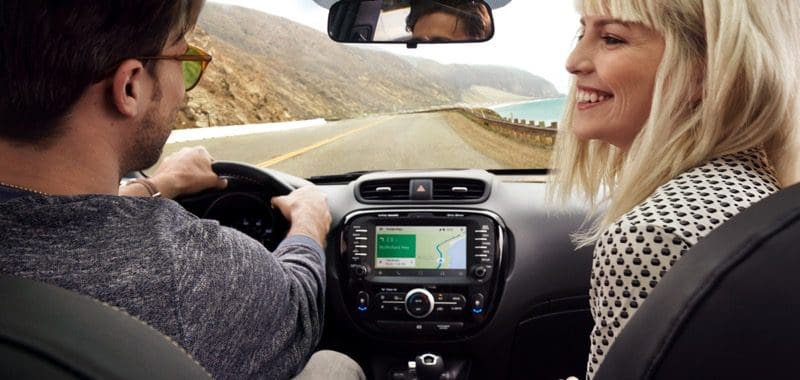
Android AutoWhen it comes to staying in touch with your family and friends while behind the wheel, we all know that it’s best to keep your cellphone in your pocket or purse. What do you do when you just have to communicate? Do it intelligently and safely with a smartphone integration system like Android Auto. Let’s look at the functionality of this unique communication solution.

What Is It?

Android AutoAndroid Auto is a software suite that runs on a multimedia source unit. Android Auto will work with most Android-based cellular phones running version 5 (Lollipop) or newer of the Android operating system.

Android Auto provides users with an intuitive and easy-to-use interface that allows them to make phone calls, send and receive text messages, play music, and use Google Maps for GPS-based navigation. The entire interface was designed specifically to be used while in the car. The icons are large and easy to read, and you can use Google’s voice recognition interface to execute commands for most functions.

How Do I Use It?

Android AutoIt’s very easy to use Android Auto. Start by downloading and installing the Android Auto application on your smartphone from the Google Play store. Pair your phone to the radio over Bluetooth. Plug the USB cable into your phone. Depending on the model of your source unit, Android Auto should launch automatically or may require that you should press the Android Auto button. From there, you will see the home screen with information such as recent navigation searches and weather information. All you have to do to start using Android Auto is press the microphone button and talk. If you prefer to press buttons, there is a row of smart keys at the bottom of the screen.

What Can I Do?

Android AutoLet’s say you get stuck in traffic and you need to call someone with whom you have an appointment. Press the voice button and simply say, “Call Sam Smith” or “Call 321-555-1234.” The radio and phone will take care of the rest. The same goes for sending a text message; simply press the voice button and say “Send Sam Smith a text message.” The system will respond by asking what you want to say, to which you can reply, again verbally, “Hi, Sam, I’m stuck in traffic. I will be 20 minutes late. Please accept my apologies.” Google will send your text message. If and when Sam responds, you can ask Android Auto to read you the reply message.

Picking a song from the music stored on your phone is just as easy. Press the voice button and ask it to “Play Lorde” or anything else you have available.

Android AutoYou can use the voice recognition system to select a navigation destination just as easily. Simply press the voice button and say, “Take me to the nearest gas station” or “Find me an Italian restaurant” or “Plot a route to 555 Renegade Road in Bismarck.” There are several benefits to using Google Maps to assist in planning your route. You have access to the latest destination information from the inconceivably massive Google database. You always have the latest mapping. There is never a need to buy anything. Google provides real-time traffic flow information to help plan your route efficiently.

Additional Android Auto Applications

Android AutoAndroid Auto has released a development kit to allow third-party companies to create applications that will integrate with Android Auto. These apps include Pandora, iHeartRadio, Spotify Music, TuneIn Radio, Skype and many more. You also get access to Google Play Music for free for 90 days when you first start using Android Auto. That’s 30 million songs, right at your fingertips.

If you have an Android phone and are looking for a safe way to stay in touch, be entertained and get the best driving directions available, all while driving, then drop into your local car audio specialist retailer. Bring your phone along – chances are they will have a unit on display that you can try out.

This article is written and produced by the team at www.BestCarAudio.com. Reproduction or use of any kind is prohibited without the express written permission of 1sixty8 media.

Filed Under: ARTICLES, Car Audio, Integration, RESOURCE LIBRARY

The Importance Of Professional Mobile Electronics Installation

Installation
Photo courtesy of Prestige Car Audio And Marine

Several aspects of the automotive industry have always been embraced by hobbyists and do-it-yourself enthusiasts. Being able to say that you created something with your own bare hands would make anyone feel proud. In the mobile electronics industry, carmakers have been rapidly advancing the technology used in new cars. From computer data networks and advanced vehicle construction materials to elaborate factory audio system tuning, all of these technologies present unique challenges that many people simply aren’t aware of. Failure to compensate for these can wreak havoc with your vehicle’s electrical system, damage the products you are installing or simply result in poor performance from your audio equipment.

Let’s look closely at why it’s best to put the reliability of your vehicle, and the performance of your audio equipment, in the hands of a a shop offering professional installation.

Computers

Installation
Photo courtesy of Cartronix.

Automobile manufacturers are always striving to make their vehicles as fuel-efficient as possible while offering the latest technologies and features. One way they save weight is by putting different devices and computers on a computer data network. Rather than running a myriad of control wires from component to component, they run power and ground, and a pair of data wires. Everything from door locks and trunk release modules to ABS brake and traction control systems can talk to each other on the data network.

Where these networks pose a challenge is when you want to add or remove something from the vehicle. Say you have a vehicle that has a secondary radio display in the dash, but you want to upgrade your audio system. The display may get very upset when you take the radio away. Likewise, you typically can’t add new devices to the data network to add new features.

Your car audio specialist retailers have the experience to work with these data networks. They know what interfaces are available for options like a remote starter or backup camera integration, and they have the manufacturer support to program and install them without causing Check Engine or MIL lights.

Reliability

When working on a vehicle, there are many different ways to run wires and make electrical connections. Automotive mechanics know that it’s hard to beat the knowledge and experience that a veteran car audio installer possesses when it comes to working on vehicle electrical systems. They make dozens, if not hundreds, of electrical connections each and every day.

InstallationThe connections are electrically sound, offering little to no resistance to current flow. Equally, the connections are mechanically sound, ensuring that they will be at least as reliable as the factory connections, if not much better.

Finally, many shops use materials like split loom, nylon sleeves or cloth tape to protect wires as they run through the vehicle. These protective coverings also make the wiring look as if it came from the factory.

Product Warranty

Many mobile electronics manufacturers offer extensions on their product warranties when the products are sold and installed by an authorized dealer. Authorized retailers have been trained on the features of the products they sell. In the case of high-end brands, this training often extends to techniques and methodologies that make the products sound better in your vehicle, and subsequently last longer. The proper installation and configuration of mobile electronic components is the key to their performance and reliability.

Audio Integration

Installation
Photo courtesy of Prestige Car Audio And Marine.

Factory audio systems are becoming more and more complicated. They still don’t rival what is available from the aftermarket, but they have improved. One big step automakers have made in the performance of their audio systems is in their tuning. More and more factory source units and amplifiers include advanced equalization and time correction to maximize the performance of the audio system. When it comes time to upgrade these systems, installers have the techniques and equipment required to test the signals going to the speakers to determine if signal correction is required. If you omit signal correction when installing a new speaker, the tuning that made a cheap factory speaker sound mediocre will work against you, and make a great speaker sound only so-so. Factory audio system signal measurement and correction is now a way of life for a car audio installer.

Modern Vehicle Chassis Design

Did you know that automakers are now using aluminum panels in the construction of their vehicles? In the ongoing battle to reduce weight, the use of aluminum will continue to increase year after year. The downside for the mobile electronics enthusiast is that aluminum is not as good a conductor of electrical current as steel is. In fact, pound for pound, it offers 30% more resistance to the flow of electrical current. This dramatically affects the amount of current we can deliver to high-power audio amplifiers.

Worse than the fact that they are using aluminum is that they have also started using structural adhesives to bond panels together. Spot welds are quick, but they only connect a small area. A good bead of 3M, Loctite or Proform structural adhesive between two aluminum panels connects the entire overlapping surface of the panel together. There is less chance of movement and less chance of corrosion. There’s a downside to this as well: These structural adhesives do not conduct electricity.

If you work with experienced installers, they know how to deal with vehicles that have aluminum chassis and/or adhesive construction. Failure to compensate for these modern construction methods could result in damaged equipment and poor performance.

Choose Professional Installation

For most people, their vehicle is their second-most expensive purchase after their homes. When it comes time to have work done, the knowledge and experience of a trained professional can help ensure that you get all the performance you want from your purchase without any of the headaches of nonprofessional installation. Contact your local car audio specialist retailer today.

This article is written and produced by the team at www.BestCarAudio.com. Reproduction or use of any kind is prohibited without the express written permission of 1sixty8 media.

Filed Under: ARTICLES, Car Audio, RESOURCE LIBRARY

Adding An Auxiliary Input To Your Factory Radio

Auxiliary InputA message that mobile enhancement retailers strive to share is that we want you to come to us with your feature requests or ideas. If you want a remote starter or audio system upgrade, you know to come to us – but did you know we also can install heated seats, auto-dimming mirrors or auxiliary input jacks on factory audio systems? We can, and our prices are often much less than dealer options or upgraded trim packages on new vehicles. Let’s look at a few options for auxiliary input additions.

Why Would You Want an Auxiliary Input?

Auxiliary InputWe all seem to have at least few hundred of our favorite songs stored on our cellphones or portable media players. We listen to them while we are out for a walk, grocery shopping or even at our desks at work, but we can’t always listen in our cars or trucks. If your factory radio doesn’t have Bluetooth or a USB port to which you can connect your phone, then there is no easy way to enjoy your music. In addition, in many states and provinces, it is illegal to wear headphones while driving. What is the solution? We can add an auxiliary input to your factory radio.

An auxiliary input interface allows you to connect the 1/8-inch headphone jack output of your smartphone or media player to your radio. Once it is connected, you can listen to your music through the factory radio and speakers.

Optical Connection

Auxiliary Input
NAV-TV MOST AUX adapter

Many European vehicles, such as Porsche, Mercedes-Benz, Range Rover, Audi, BMW, Aston Martin, Jaguar and Bentley, use a digital fiber optic bus communication system called MOST for multimedia and audio transfer. MOST stands for Media Oriented Systems Transport. This fiber optic system handles audio signals between the radio, Bluetooth, and iPod modules and amplifiers. In many models of the vehicle brands listed above, we can add an in-line module that provides a stereo auxiliary input. No need to replace the expensive radio. Just connect to your smartphone’s headphone jack and enjoy.

Wired Connections

Auxiliary InputSeveral companies manufacture auxiliary input interfaces that mimic the presence of an optional satellite radio tuner module. The interface will have a stereo input connection for your music and will connect to your factory radio via the satellite radio tuner interface port. Just press the Sat button to activate the input.

Many older vehicles on the road had the option for a CD changer. We can provide an auxiliary input interface for many of these vehicles that allows you to connect your portable media player or cellphone to these radios. To select the aux input, just press the CD changer button.

RF Connection

For decades, one of the most popular methods of feeding and audio signal into a radio that didn’t have a dedicated auxiliary input was to use an FM Modulator. These devices would take the audio signal from your media player or phone, and transmit that into your radio via the FM receiver. You would turn the modulator on, tune to a specific radio station (which is selectable so it doesn’t interfere with a local station), and voila – you could hear your music. These are still available when a wired connection is simply not possible. The sound quality is limited by the FM receiver of your radio, but it’s better than listening to your music via the speaker built into your phone.

Visit Your Local Car Audio Specialist Today

While there isn’t an auxiliary input interface available for every make, model and trim level of vehicle, a lot are covered. Drop by your local car audio specialist retailer to see if one is available for your vehicle. You will likely want to have the shop install the interface for you – they know how to take apart the dash or remove the radio without damaging anything. And they know the best places to power the new interface. Boy, are they ever smart!

This article is written and produced by the team at www.BestCarAudio.com. Reproduction or use of any kind is prohibited without the express written permission of 1sixty8 media.

Filed Under: ARTICLES, Bluetooth, Car Audio, Smartphone Integration

  • « Previous Page
  • 1
  • …
  • 98
  • 99
  • 100
  • 101
  • 102
  • Next Page »

Recent Articles

The back on an amplifier

What Is a Gain Control on a Car Audio Amplifier?

March 1, 2026 

The gain control is one of the most misunderstood features of a car audio amplifier. It is often mistaken for a volume knob, leading to improper usage and potential damage to the … [Read More...]

A man with a clipboard inspecting under the hood of a vehicle

Why the Shop Matters Most: Certified Technicians Make the Difference

February 23, 2026 

When it comes to aftermarket upgrades or vehicle service, the most important factor is not the product itself—it is the quality of the people who install and support it. A … [Read More...]

A man's hand touching the screen of a Multimedia Receiver

Modern Multimedia Receivers Have Multiple Volume Controls

February 22, 2026 

From the 1960s through the 1980s, car radios used mechanical potentiometers to adjust volume. As time progressed, volume controls moved to the digital domain, and radios employed … [Read More...]

A car key and remote starter on a key ring sitting on a windowsill with a view of a truck covered in snow outside with pine trees in the background

Why You Need Two Keys for Your Car Starter Upgrade

February 15, 2026 

Many of the car stereo shops in the Northern US and Canada shift focus to installing remote car starters in the late fall. If you are shopping for a remote starter, you may be … [Read More...]

Customer Reviews

Subscribe to Our Website

Enter your email address to subscribe to our website and receive notifications of new posts by email.

Location


Get Directions to Audio Innovations

Find Us

Audio Innovations

1105 Jim's Lane
Conway, AR 72032
501-358-6545

Connect With Us

  • Facebook
  • Instagram

Services

  • Car Audio
  • Driver Safety Systems
  • Marine Audio
  • Motorcycle Audio
  • Radar and Laser Detector Systems
  • Remote Starters

Hours

Monday, Tuesday, Wednesday, Thursday, Friday9:00 am – 6:00 pm

Copyright © 2026 Audio Innovations · Privacy Policy · Website by 1sixty8 media, inc. · Log in


Loading Comments...